Spring Raft Floating
Each year, LPC staff and volunteers float as many as 160 Common Loon nest rafts throughout New Hampshire. Roughly one-third of these rafts are floated by volunteers. The guidelines below are intended to help volunteers who float rafts ensure that the rafts are placed in suitable locations and are anchored properly. If you have questions or concerns about floating your raft, or if you need replacement materials, please email field@loon.org or call us at (603)476-5666. Thank you for your help!
When and Where to Float your Nest Raft
Rafts may be floated any time after ice out—the earlier the better. All rafts should be floated by mid-May at absolute latest and should be placed in areas that are protected from prevailing winds and wave action. Rafts must be placed in areas where they will not impede safe navigation by boats. Quiet coves are ideal. Within these protected areas, rafts should be 10–50 feet from shore, depending on level of exposure to wind and human activity. Ideally, rafts should be floated in areas that are 2-10 feet in depth. In the first year that a raft is floated, LPC biologists will work with volunteers to choose a suitable location for the raft. We ask to be included in any discussions about changing the location of rafts. If you are unable to float your raft by mid-May, please be in touch with LPC at field@loon.org or (603)476-5666.
Rafts must have a minimum of two anchors, placed on opposite corners. LPC constructs rafts with loops of stainless steel wire rope on the corners—these are the attachment point for anchors. Anchors should be fastened to the wire rope using stainless steel locking carabiners. Spring snap carabiners are not ideal, as they detach more easily. When floating rafts, drop the anchors at a 45 degree angle from the raft.The diagram to the right shows proper raft anchor deployment.
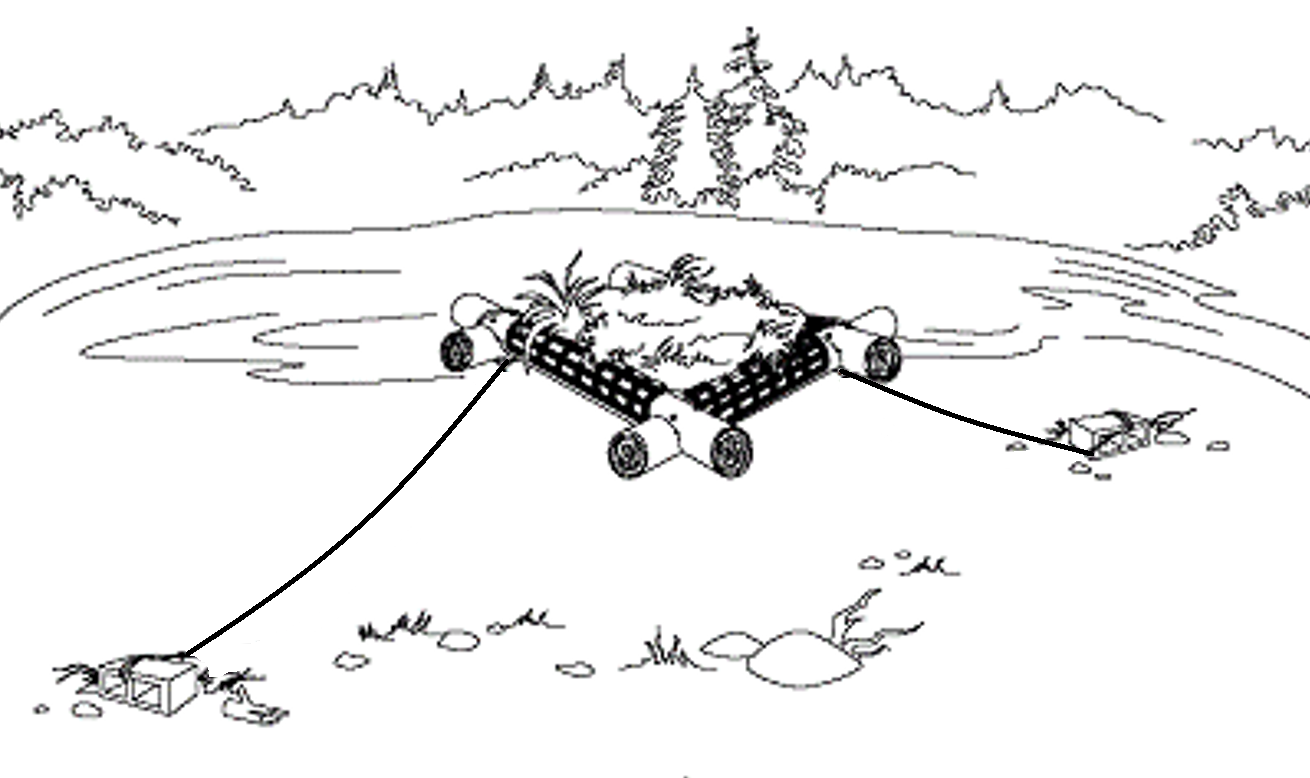
Diagram by Shearon Murphy.
Interesting links
Here are some interesting links for you! Enjoy your stay :)Pages
- 2022 Public Presentations
- 2025 “Collect to Protect” Contest
- About
- About Loon Safe
- About Loons
- Annual Appeal
- Annual Benefit Raffle
- Annual Maintenance
- Annual Meeting
- Assembling a Raft Floating Team
- Banding and Tracking Loons
- Bequests
- Bills Test Page
- Birdathon Bloomathon
- Blog
- Board of Trustees
- Business and Association Members
- Business and Association Membership
- Caroline Test Page
- Cart
- Celebration
- Census
- Chat Log
- Checkout
- Common Loon Plumage and Appearance
- Contact Us
- Counting Loons
- Director of Development and Membership
- Donate
- Donate to Support LPC’s Mission
- Donations
- East Lakes Region Volunteer Dashboard
- Effects of Lead Fishing Tackle on Loons in New Hampshire
- EV Charger Donations
- Events
- FAQs and Loons and Lead Poisoning
- Feedback
- Field Volunteer Opportunities
- Financial Statements and Tax Returns
- Fish Lead Free
- Frequently Asked Questions
- Guardian
- Guided Paddling Trips
- Guidelines for Boaters
- Hatch Time Contest
- Hatch Time Contest – LoonCam 2
- HollyTest
- Home
- Household Hazardous Waste Sites that Now Accept Lead (Pb) Fishing Tackle
- How to be Loon Safe
- Initiatives
- Is it a Loon?
- Job Opportunities
- Keeping Up with LPC!
- KLK
- Lakes Region East Report
- lco
- Lead Tackle Buyback Terms
- lead-tackle-buyback-terms
- Lees Pond
- Legislation
- Loon Behavior
- Loon Center Volunteer
- Loon Chick Development
- Loon Diet
- Loon Fact Sheets
- Loon Leadership Circle
- Loon Links
- Loon Nesting Signs and Float Lines
- Loon Preservation Committee News
- Loon Recovery Plan
- Loon Reproduction
- Loon Rescues
- Loon Safe
- Loon Safe
- Loon Safe Fishing Guidelines
- Looncam Control
- Looncam Live 2
- looncam2022
- looncamstaff
- Loons & Lead Legislative History
- Loons and Lead
- Loons and Lead
- Loons as Biomonitors
- LoonSafe Partner Resources
- LPC Loon Cam
- LPC’s Lead Tackle Buyback
- Management
- Meet (some of) the Banded Loons of New Hampshire!
- Memberships
- Monadnock Region Volunteer Dashboard
- Monadnock Report
- Monitoring
- Mortality and Nest Failure
- My account
- Nest Rafts
- Nest Rafts
- Newsletter Archive
- North Country Report
- North Country Volunteer Dashboard
- Northeast Loon Study Working Group (NELSWG)
- Oil Spills
- Online Census Form
- Online Census Form Test
- Our Work
- Outreach and Public Education
- Participating Retailers – List
- Partnerships for Conservation
- Pemigewasset Region Volunteer Dashboard
- Pemigewasset Report
- Personal Membership
- Presentation Request Form
- Presentation Survey
- Presentations
- Privacy Policy
- Privacy Policy
- Raft Criteria
- Report a Loon in Distress
- Report a Loon Nest in the East Lakes Region
- Report a Loon Nest in the Monadnock Region
- Report a Loon Nest in the North Country
- Report a Loon Nest in the Pemigewasset Region
- Report a Loon Nest in the Seacoast Region
- Report a Loon Nest in the Sunapee Region
- Report a Loon Nest in the West Lakes Region
- Report a Loon Nest on Lake Winnipesaukee
- Reporting Loons in Distress
- Research
- Resources for Partners
- Seacoast Region Volunteer Dashboard
- Seacoast Report
- Shop
- Shoreline Development and Lake Use
- Site Map
- SLLIReport
- Social Media Donations
- Spring Raft Floating
- Squam Lake Loon Initiative
- Squam News Blog
- Staff
- Staff
- Stock Gifts
- Subscribe
- Subscribe
- Sunapee Region Volunteer Dashboard
- Sunapee Report
- Support
- Support LPC
- Support LPC’s Loon Recovery Program
- Supporting Associations
- Terms and Conditions
- Terms of Use
- Thank you for subscribing
- The Call of the Loon
- The Loon Center
- The Loon Safe Patch and Troop Award
- The Markus Wildlife Sanctuary
- Threats to Loons
- Timelapse
- Transfer Stations
- Transfer Stations
- Understanding Loons: Learn to Read the Signs
- Vegetating Your Nest Raft
- Visit
- Voices of the Loon
- Volunteer
- Volunteer Observation Report
- West Lakes Region Volunteer Dashboard
- WestReport
- Where to Buy Lead-Free Tackle
- Winnipesaukee Monthly Volunteer Report
- Winnipesaukee Volunteer Dashboard
- Winter Storage
- You Can Help Loons!
