
Courtesy of Kittie Wilson
About Loons
North America is home to five species of loons: the Red-throated Loon, the Pacific Loon, the Arctic Loon, the Yellow-billed Loon, and the Common Loon. Of these species, the Common Loon is the most widespread and well-known. It is the only loon species that breeds as far south as New Hampshire.
Loons are a migratory species that spend the breeding season on inland lakes and overwinter on the ocean. They arrive on their breeding lakes shortly after the ice goes out in the spring and remain late into the fall or early winter, often leaving for the ocean shortly before ice forms. Loons display high territory fidelity, and individuals typically return to the same breeding lake year after year. This often results in the same male and female loons pairing up and breeding together in consecutive years; however, contrary to popular belief, loons do not mate for life. If one member of a pair dies or is displaced by a rival, its mate will accept a new breeding partner.
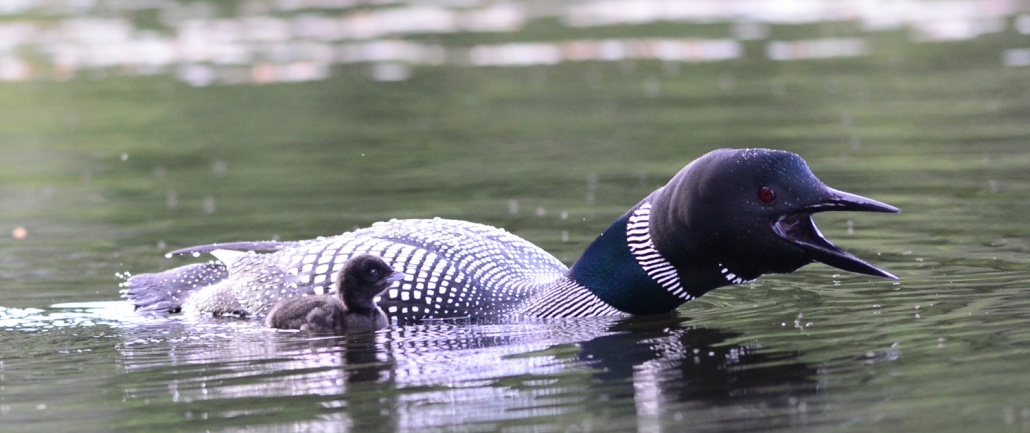
The Call of the Loon
Perhaps one of the most fascinating things about loons is their haunting and variable voice.
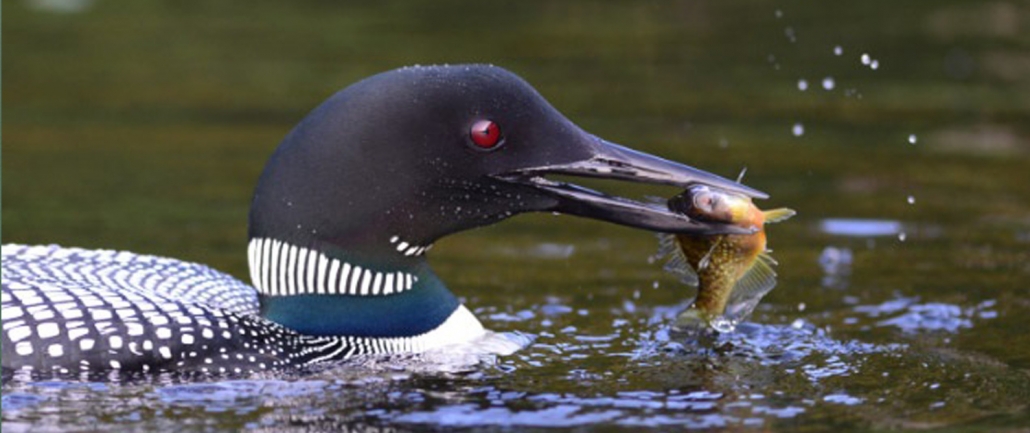
Loon Diet
During the breeding season, loons spend their days feeding, preening, resting, and caring for their young. Their diet in the summer consists primarily of fish, but they eat many other aquatic creatures as well.
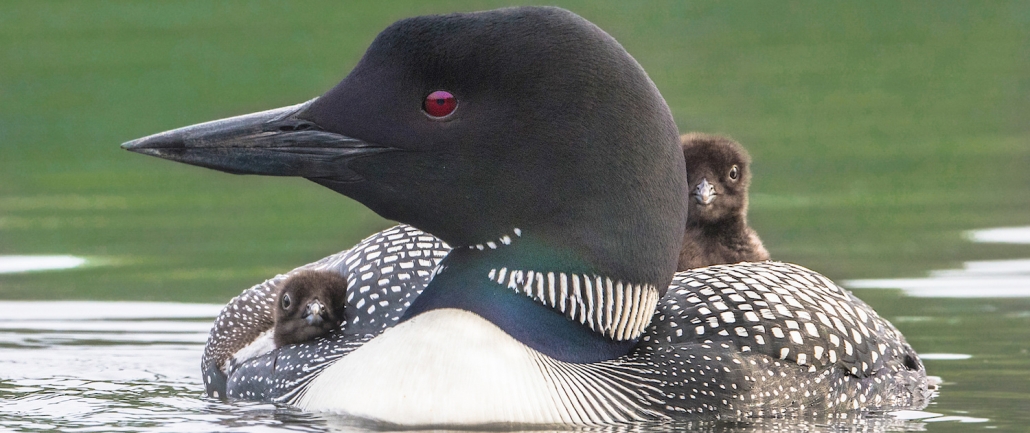
Loon Reproduction
Loons spend the breeding season on inland lakes. While there, their primary goal is to successfully hatch and fledge at least one chick.

Loon Appearance
Male and female loons are identical in appearance, although males are generally about 25% larger than females.
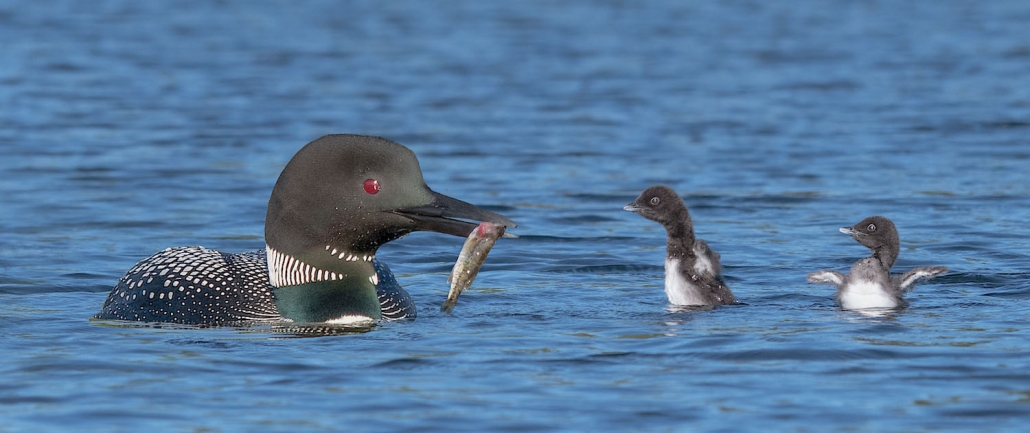
Loon Chick Development
Loon chicks grow rapidly over the first several weeks of their lives.
Loon Behavior
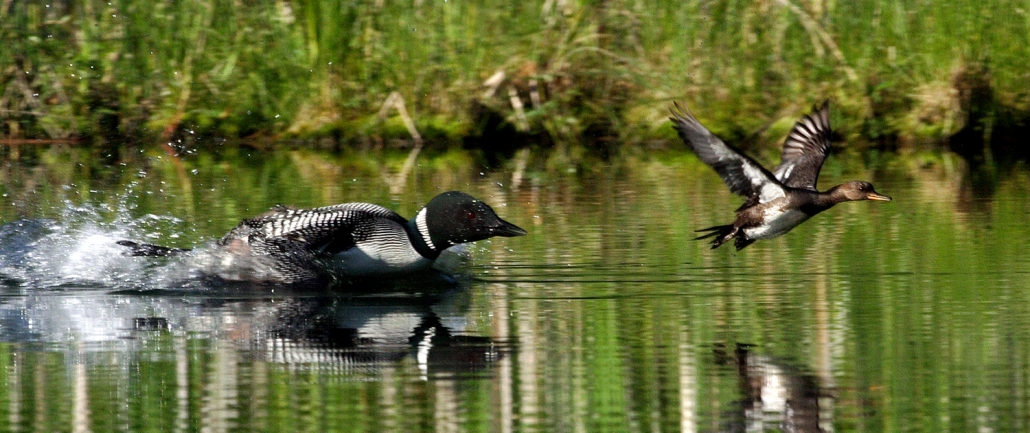
Some loon behaviors are necessary for self maintenance. Others are performed in response to other animals, including humans. Learning to read loon behavior can help us to enjoy these birds without causing them distress.
Threats to Loons
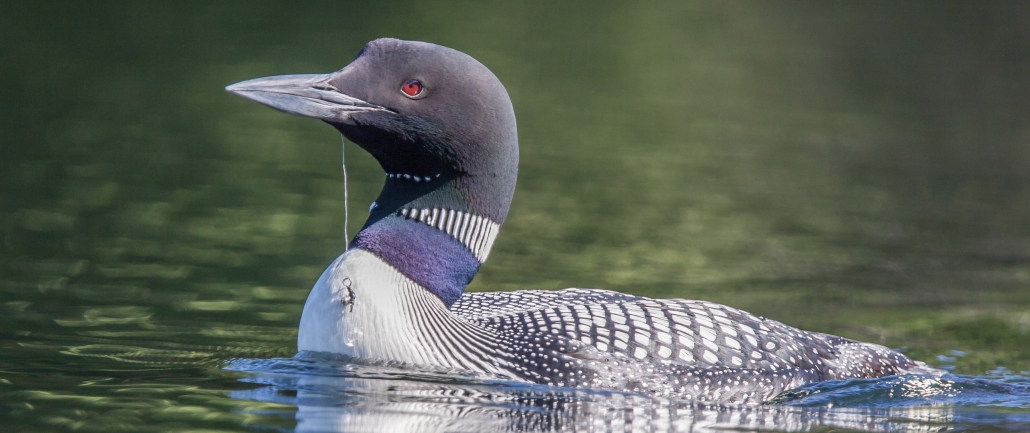
Lead poisoning resulting from the ingestion of lead fishing tackle is the leading cause of documented common loon mortality in New Hampshire.
Live Loon Cam
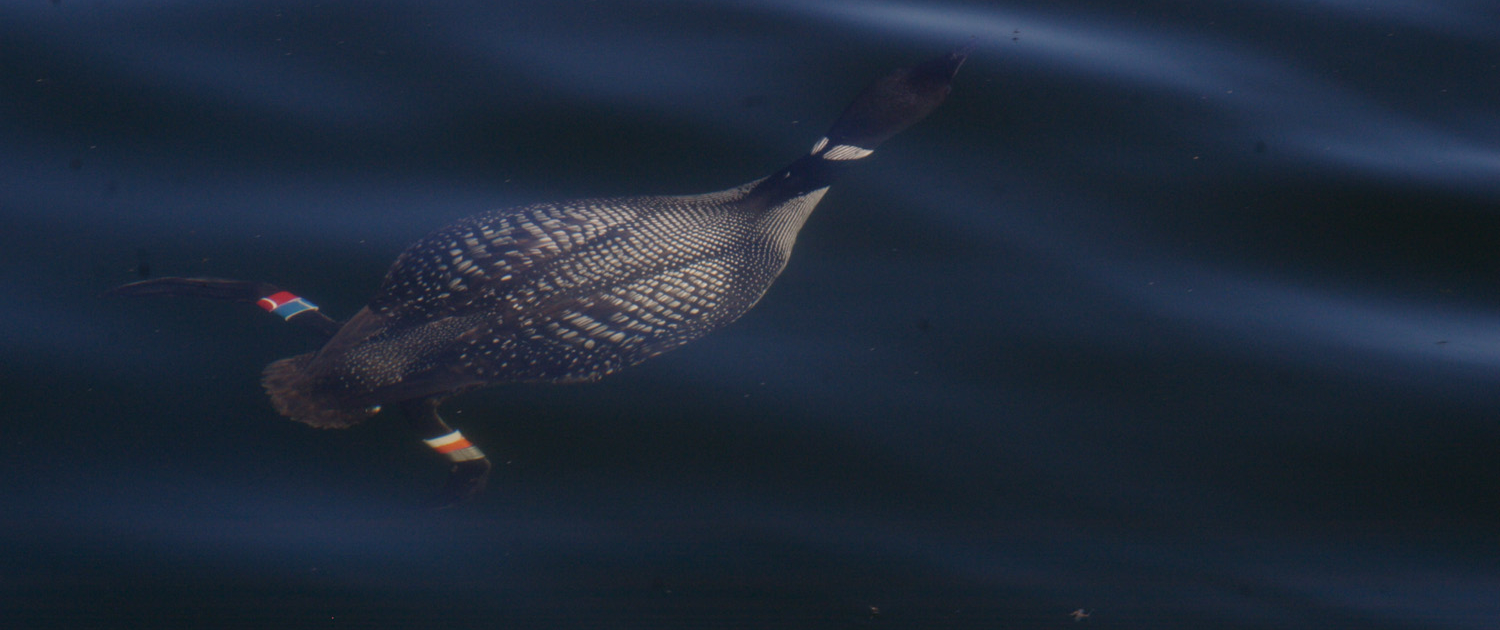
The Loon Preservation Committee live streams two common loon nests each year, beginning shortly after ice-out and continuing well into July.