
Courtesy of John Rockwood
Concerned Loons
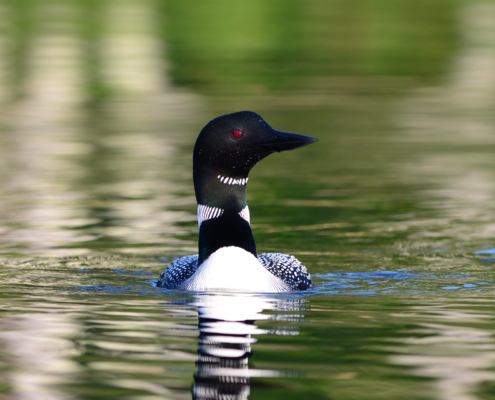
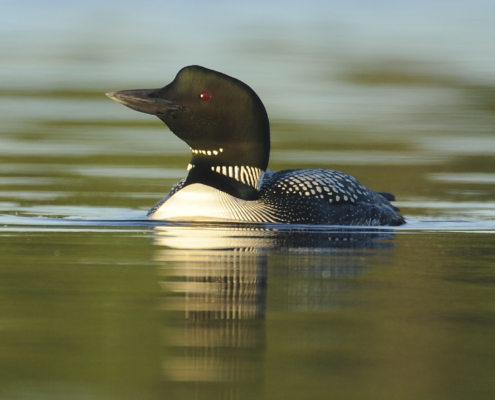
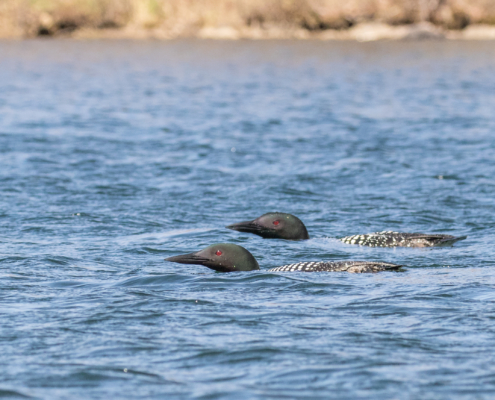
Subtle changes in head and neck posture can indicate that a loon is concerned about how close you are. Keep an eye out for the behaviors described below, all of which indicate that a loon is becoming stressed and needs more space.
Raised/Squared off Brow: A nervous loon will often raise the feathers on its forehead, giving a ‘squared off’ look.
Extended Neck: A loon that is aware of or concerned about a potential threat will stretch its neck, lifting its head high in the air to better evaluate the situation.
Sitting Low in the Water: If they detect a threat, loons will squeeze air out of the spaces between their feathers, allowing them to sink low in the water. This is an attempt to appear inconspicuous to the perceived threat.
Moving Away: One of the first things that a loon will do if it is bothered by the presence of a boat is swim away. If a loon swims away from you, please allow it to get away. Pursuing/chasing loons puts them under stress.
Vocalizations: Any vocalization given by a loon when you are in close proximity can indicate that it is stressed. If loons begin to call as you approach, it is best to back away to avoid causing them more stress.
Stressed Loons
The following behaviors indicate extreme stress. If you see a loon performing any of these behaviors, please back away until it resumes a more relaxed position.
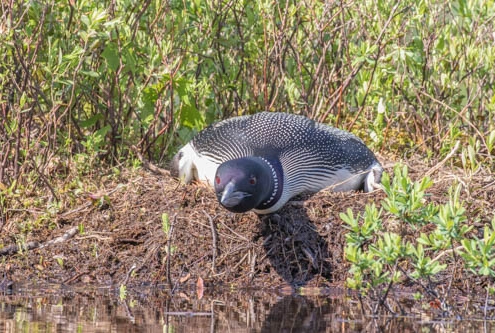
Hangover Position: When nesting loons feel threatened, they will assume the ‘hangover’ position, flattening their bodies over their nests and angling their heads towards the water. This posture serves two purposes: First, it helps the loon to appear more inconspicuous, an attempt to ‘hide’ from a perceived threat. Second, it puts the loon into a diving position—all that the loon has to do is kick its feet and it will be back in the water, where it is more mobile and thus less vulnerable than it is on land. Loons in hangover position may be on the verge of flushing the nest, leaving their eggs vulnerable to overheating, chilling, and/or predation. If you see a loon in this position, please back away to prevent potential nest failure. And if you accidentally flush a loon off of the nest, leave the area immediately—if the threat leaves, most loons will get right back on the nest.
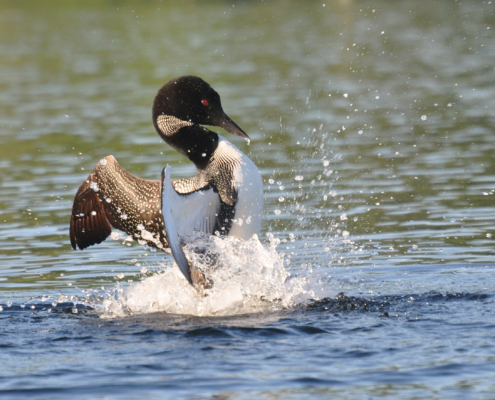
Penguin Dance: If approached too closely, a loon may call and/or perform a distraction display called a “penguin dance.” When penguin dancing, loons rear up in the water with their wings either spread out or clasped against their bodies. They rapidly paddle their feet in the water to maintain this position. This display takes a lot of the loon’s energy and indicates that the loon is very stressed. If you see this behavior, please leave the area immediately!
Relaxed Loons
The photos and descriptions below show what loons look like when they are relaxed, both on the water and on the nest. When a loon that you are watching displays these behaviors, you can continue to watch it with confidence that you are not too close.
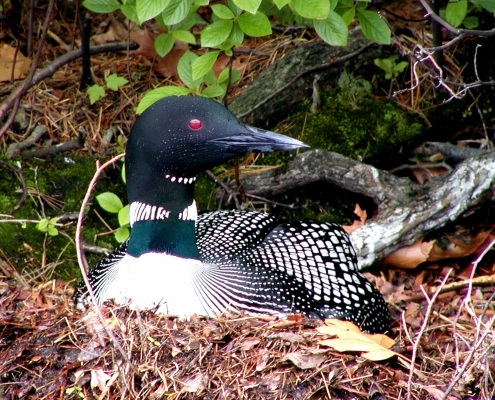
On the nest, a loon that is relaxed will hold its head upright and survey its surroundings. Loons that are relaxed on the nest may also perform other normal behaviors, such as sleeping (nestling their heads onto their backs and closing their eyes) or turning their eggs.
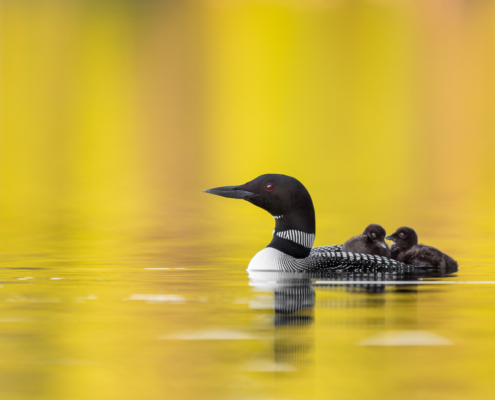
Loons on the water that are not stressed will have a rounded appearance to their heads (as opposed to the squared-off brow, which indicates concern). When relaxed, loons are calm and able to carry out normal behaviors to care for themselves and their chicks. Feel free to continue watching!