
Vegetating Your Nest Raft
While loons will rearrange the materials that they find on a nest raft, they will not usually bring any additional nesting material to the nest raft themselves. That means that we must provide them with enough material to build a nest bowl. Providing an adequate amount of nest material is essential, as eggs may roll off of an inadequately provisioned raft, especially in windy conditions or in areas prone to disturbance by boat wakes.
The ultimate goal is to create a raft that has self-sustaining, rooted vegetation that can be left in place on the raft from year to year. To achieve this from a bare raft, follow these steps:
1) Cover the raft with a layer of topsoil. This can be loam or topsoil purchased from a local landscaper or mineral soil dug up from a suitable upland location near the raft site. If needed, secure a layer of weed fabric to the raft to hold the soil. Then cover the entire platform with soil, adding more in the center to create an elevated bowl. Erosion control coir or jute netting can be secured to the raft as the soil is added to help retain it. The netting will be almost entirely buried in the soil.
2) Cover the soil with a layer of leaf litter and/or aquatic vegetation or detritus that has washed up along the shore, or a thin layer of leaf litter. Avoid particularly moldy leaves, and do NOT use straw or hay, which may harbor harmful mold.
3) Top the organic layer with live moss, turf, or plants collected from along the shoreline. This step is important in order to establish rooted herbaceous cover over time. Moss and plants can be collected from along the shoreline, with landowner permission. To prevent the spread of invasive species, it is important to collect raft vegetation and mosses locally.
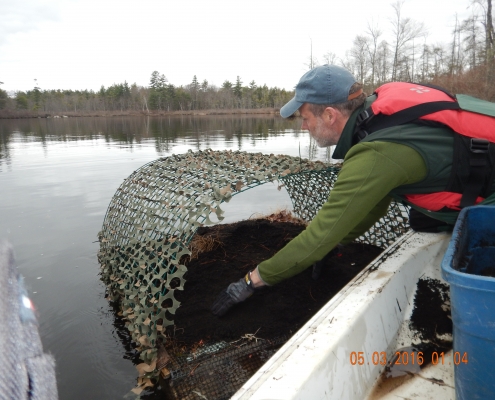
Start with a layer of soil, taking care to cover the entire base of the raft. Build up a bowl in the center of the raft.
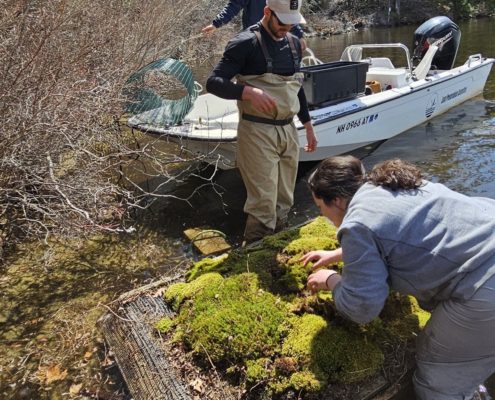
Top with moss, grasses, or other plants gathered from along the shoreline. Source these materials locally to prvent the spread of invasive species.
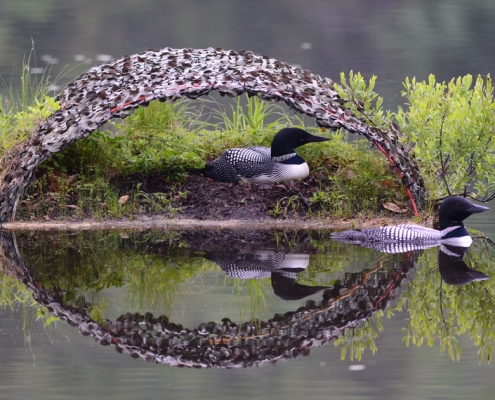
Over the years, vegetation should root down, and your raft will become self sustaining. To encourage this, try your best to keep all of the nest material on the raft as you store it over the winter—if you dump the nest material off of the raft when pulling it ashore in the fall, you will have to start vegetating from scratch the following year.
Interesting links
Here are some interesting links for you! Enjoy your stay :)Pages
- 2022 Public Presentations
- 2025 “Collect to Protect” Contest
- About
- About Loon Safe
- About Loons
- Annual Appeal
- Annual Benefit Raffle
- Annual Maintenance
- Annual Meeting
- Assembling a Raft Floating Team
- Banding and Tracking Loons
- Bequests
- Bills Test Page
- Birdathon Bloomathon
- Blog
- Board of Trustees
- Business and Association Members
- Business and Association Membership
- Caroline Test Page
- Cart
- Celebration
- Census
- Chat Log
- Checkout
- Common Loon Plumage and Appearance
- Contact Us
- Counting Loons
- Director of Development and Membership
- Donate
- Donate to Support LPC’s Mission
- Donations
- East Lakes Region Volunteer Dashboard
- Effects of Lead Fishing Tackle on Loons in New Hampshire
- EV Charger Donations
- Events
- FAQs and Loons and Lead Poisoning
- Feedback
- Field Volunteer Opportunities
- Financial Statements and Tax Returns
- Fish Lead Free
- Frequently Asked Questions
- Guardian
- Guided Paddling Trips
- Guidelines for Boaters
- Hatch Time Contest
- Hatch Time Contest – LoonCam 2
- HollyTest
- Home
- Household Hazardous Waste Sites that Now Accept Lead (Pb) Fishing Tackle
- How to be Loon Safe
- Initiatives
- Is it a Loon?
- Job Opportunities
- Keeping Up with LPC!
- KLK
- Lakes Region East Report
- lco
- Lead Tackle Buyback Terms
- lead-tackle-buyback-terms
- Lees Pond
- Legislation
- Loon Behavior
- Loon Center Volunteer
- Loon Chick Development
- Loon Diet
- Loon Fact Sheets
- Loon Leadership Circle
- Loon Links
- Loon Nesting Signs and Float Lines
- Loon Preservation Committee News
- Loon Recovery Plan
- Loon Reproduction
- Loon Rescues
- Loon Safe
- Loon Safe
- Loon Safe Fishing Guidelines
- Looncam Control
- Looncam Live 2
- looncam2022
- looncamstaff
- Loons & Lead Legislative History
- Loons and Lead
- Loons and Lead
- Loons as Biomonitors
- LoonSafe Partner Resources
- LPC Loon Cam
- LPC’s Lead Tackle Buyback
- Management
- Meet (some of) the Banded Loons of New Hampshire!
- Memberships
- Monadnock Region Volunteer Dashboard
- Monadnock Report
- Monitoring
- Mortality and Nest Failure
- My account
- Nest Rafts
- Nest Rafts
- Newsletter Archive
- North Country Report
- North Country Volunteer Dashboard
- Northeast Loon Study Working Group (NELSWG)
- Oil Spills
- Online Census Form
- Online Census Form Test
- Our Work
- Outreach and Public Education
- Participating Retailers – List
- Partnerships for Conservation
- Pemigewasset Region Volunteer Dashboard
- Pemigewasset Report
- Personal Membership
- Presentation Request Form
- Presentation Survey
- Presentations
- Privacy Policy
- Privacy Policy
- Raft Criteria
- Report a Loon in Distress
- Report a Loon Nest in the East Lakes Region
- Report a Loon Nest in the Monadnock Region
- Report a Loon Nest in the North Country
- Report a Loon Nest in the Pemigewasset Region
- Report a Loon Nest in the Seacoast Region
- Report a Loon Nest in the Sunapee Region
- Report a Loon Nest in the West Lakes Region
- Report a Loon Nest on Lake Winnipesaukee
- Reporting Loons in Distress
- Research
- Resources for Partners
- Seacoast Region Volunteer Dashboard
- Seacoast Report
- Shop
- Shoreline Development and Lake Use
- Site Map
- SLLIReport
- Social Media Donations
- Spring Raft Floating
- Squam Lake Loon Initiative
- Squam News Blog
- Staff
- Staff
- Stock Gifts
- Subscribe
- Subscribe
- Sunapee Region Volunteer Dashboard
- Sunapee Report
- Support
- Support LPC
- Support LPC’s Loon Recovery Program
- Supporting Associations
- Terms and Conditions
- Terms of Use
- Thank you for subscribing
- The Call of the Loon
- The Loon Center
- The Loon Safe Patch and Troop Award
- The Markus Wildlife Sanctuary
- Threats to Loons
- Timelapse
- Transfer Stations
- Transfer Stations
- Understanding Loons: Learn to Read the Signs
- Vegetating Your Nest Raft
- Visit
- Voices of the Loon
- Volunteer
- Volunteer Observation Report
- West Lakes Region Volunteer Dashboard
- WestReport
- Where to Buy Lead-Free Tackle
- Winnipesaukee Monthly Volunteer Report
- Winnipesaukee Volunteer Dashboard
- Winter Storage
- You Can Help Loons!
About LPC
Contact LPC
(603) 476-5666
183 Lees Mill Rd
Moultonborough, NH 03254