
Courtesy of Ray Hennessy
Guidelines for Boaters
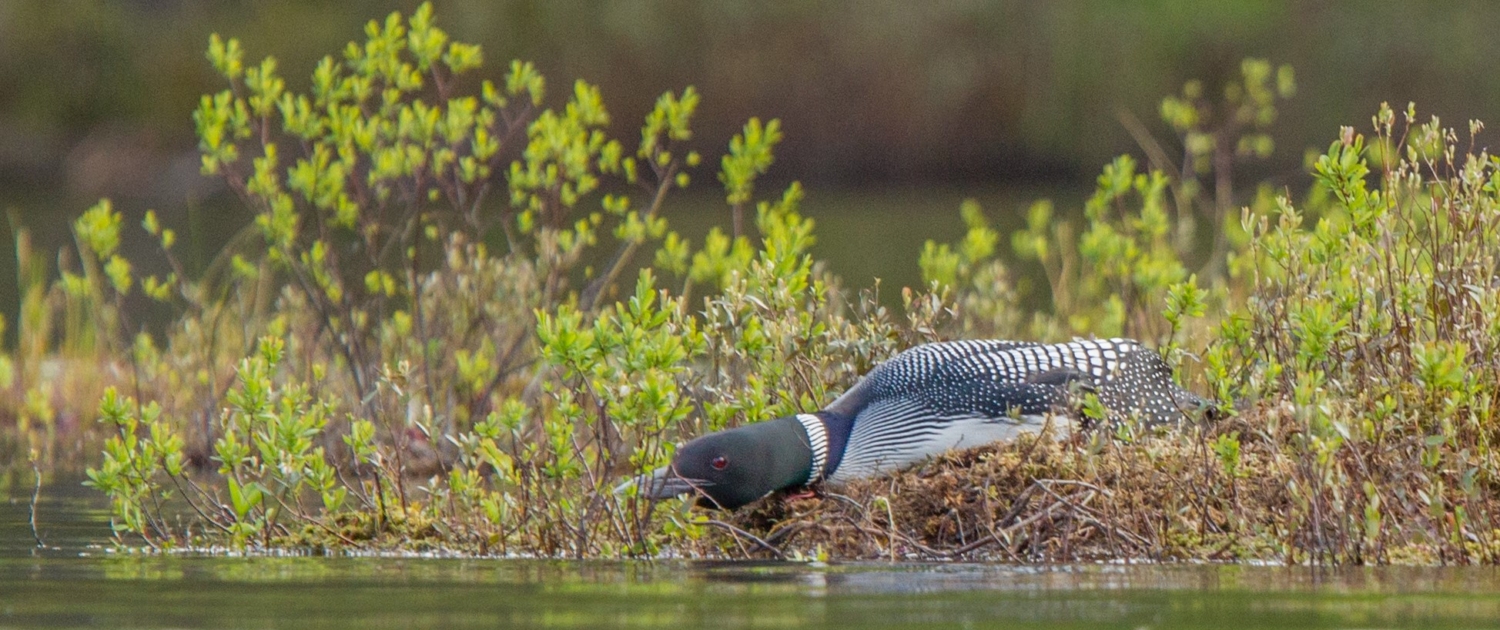
Give nesting loons space
We recommend maintaining a distance of 150 feet or more between your boat and a loon nest. The photo above shows a loon on the nest with its head lowered, a behavior that indicates the loon feels threatened. If you see a nesting loon in this position, please back away until it lifts its head and resumes a more relaxed, upright position. This guideline applies not only to motor boats and jet skis but also to human-powered vessels such as canoes, kayaks, and stand-up paddleboards.
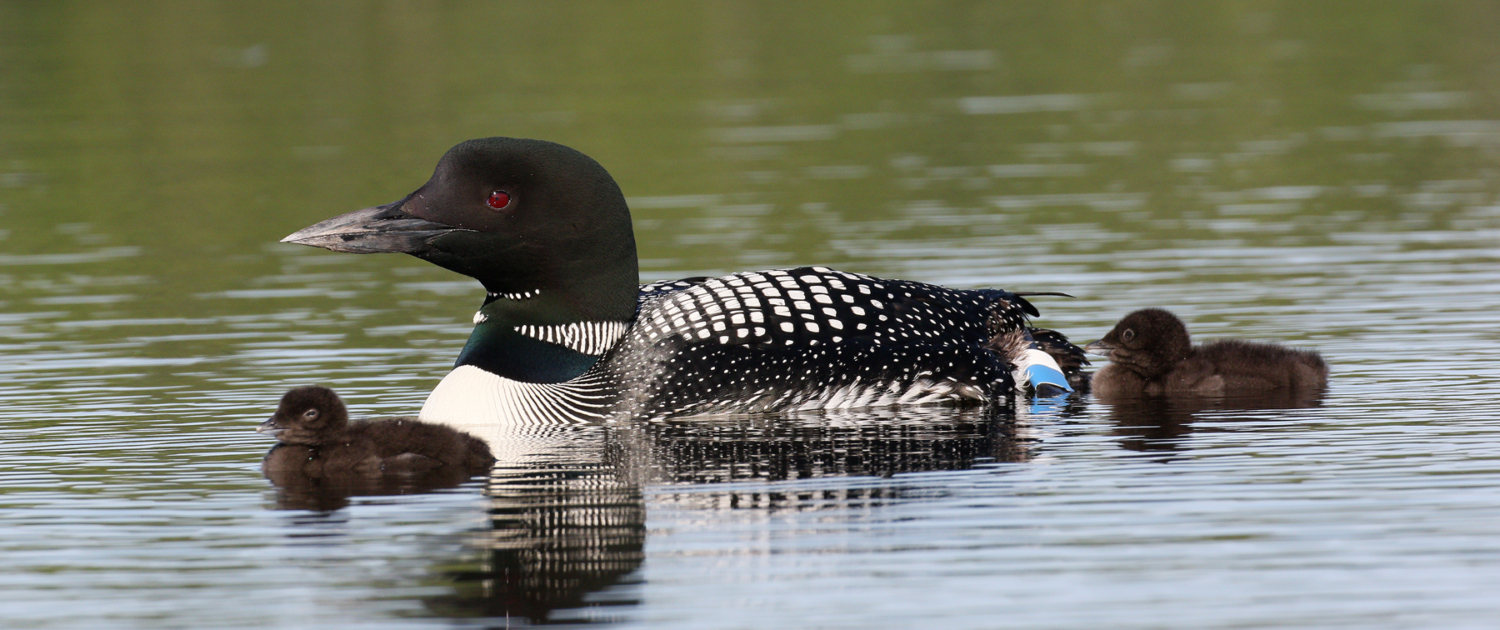
Give loons on the water space, especially if they have chicks.
We recommend a distance of at least 150 feet whenever possible.
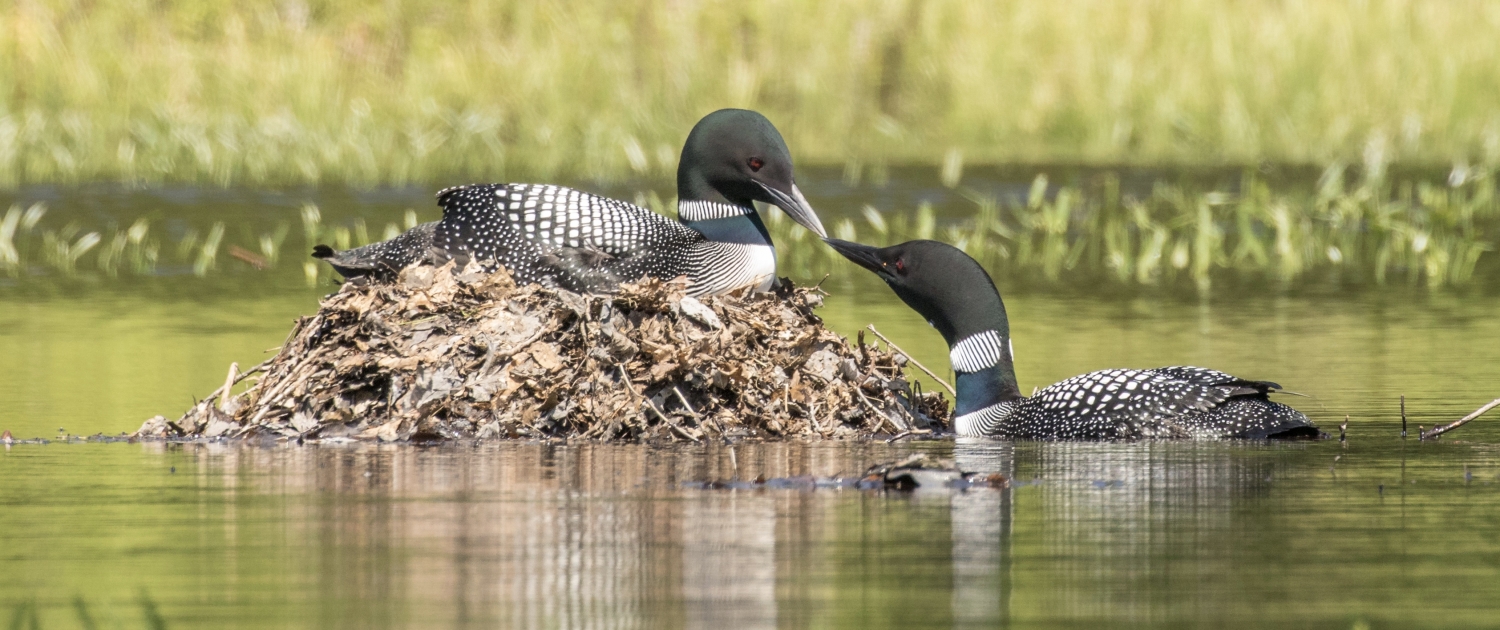
If you flush a loon off of the nest…
If you accidentally flush a loon off of the nest, leave the area immediately so that the loon can feel comfortable enough to resume incubating its eggs.
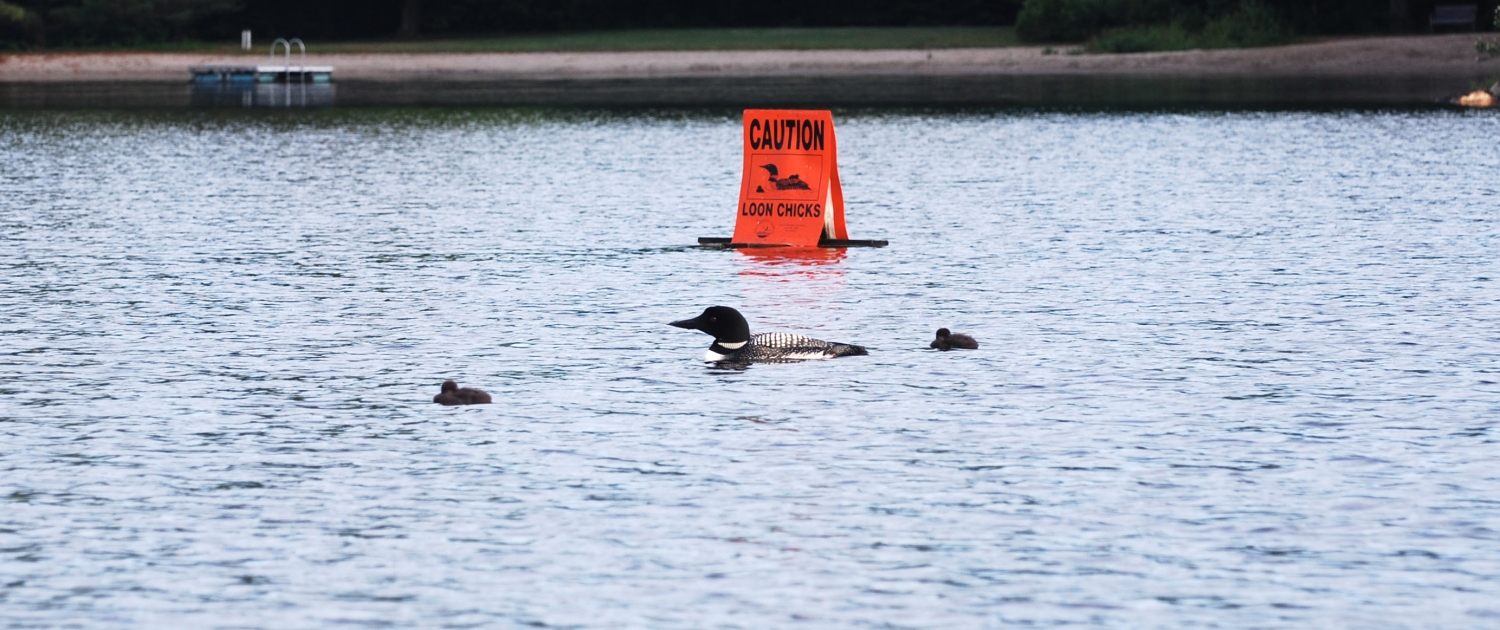
Boat cautiously around loons
Boat cautiously in areas marked with LPC’s signs, or in areas where you see a loon family.
Guidelines for Anglers

Use only non-lead, loon-safe tackle when fishing.
Lead poisoning resulting from the ingestion of lead fishing tackle is the number one cause of documented adult loon mortality in New Hampshire, accounting for 41% of documented loon deaths since 1989.
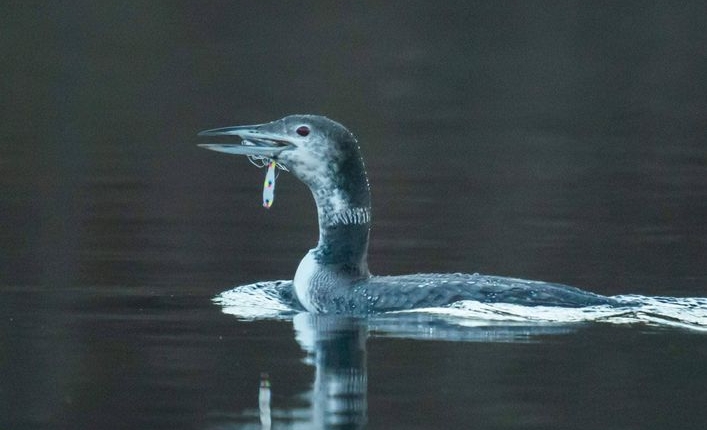
Reel in your line around loons
Avoid casting towards or in the general vicinity of loons. If a loon strikes at and breaks your line, it may become tangled.
If you accidentally hook a loon on your line, please call the Loon Preservation Committee at 603-476-5666. After 5 PM, please use our online form.
Reporting Loons in Distress
The Loon Preservation Committee rescues loons that are in distress. If you see a loon that is tangled, beached (on shore but not on a nest), floating listlessly close to shore, or otherwise in distress, please call the Loon Preservation Committee or use our online form.
Some normal loon behaviors look unusual, and loons performing these behaviors may appear to be in distress. If you see a loon flapping or thrashing in the water or picking at itself, it may just be preening or bathing. See the videos below to check whether the behavior you are observing is one of these self-maintenance behaviors.
Preening: Loons preen to keep their feathers waterproofed and in good condition. While this behavior can seem like the loon is attempting to pull something off of its body, it is actually taking oil from a gland at the base of its tail and spreading it over its feathers to keep them waterproof.
Loons bathe to clean their feathers and rid themselves of feather lice or other external parasites. Bathing involves vigorous splashing and submerging in the water and can appear alarming to observers unfamiliar with the behavior.