Courtesy of Elise Amendola/div>
LPC’s Landmark Study on Bioaccumulative Contaminants in New Hampshire Loon Eggs
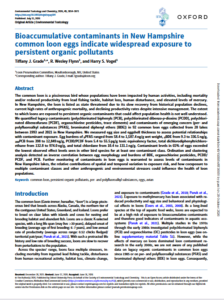
In 2026, a paper written by LPC Squam Lakes Biologist, Tiffany Grade, LPC Senior Biologist/Executive Director, Harry Vogel, and co-author Wes Flynn was published in the peer-reviewed journal Environmental Toxicology and Chemistry. In the study, we analyzed 92 inviable Common Loon eggs collected from 28 lakes across New Hampshire between 1993 and 2021 for persistent organic pollutants. The study is the first to report on levels of organic contaminants in Common Loon eggs since the 1980’s and is the first published research to ever report PFAS and BDE flame retardants in Common Loon eggs.
65% of the eggs tested in our study exceeded levels that have been found to affect the health or reproductive success of other bird species for at least one contaminant class. Eggs with higher concentrations of several persistent organic pollutants also tended to be smaller and have thinner shells, characteristics that may negatively influence hatching success and chick survival.
Overall, the results of our study indicate that loons across New Hampshire are exposed to elevated levels of chemical contaminants and that these contaminants may be impacting loon eggs, demonstrating the importance of ongoing monitoring of contaminants in New Hampshire’s loons as we work to better understand how these contaminants may affect loon health and reproduction.
Please click the image below to read the paper on the publisher’s website.