
June 20 – Solar Station Limits
Most people watching the LoonCam see loons, water, wind, rain, nest exchanges, and the long wait for hatch.
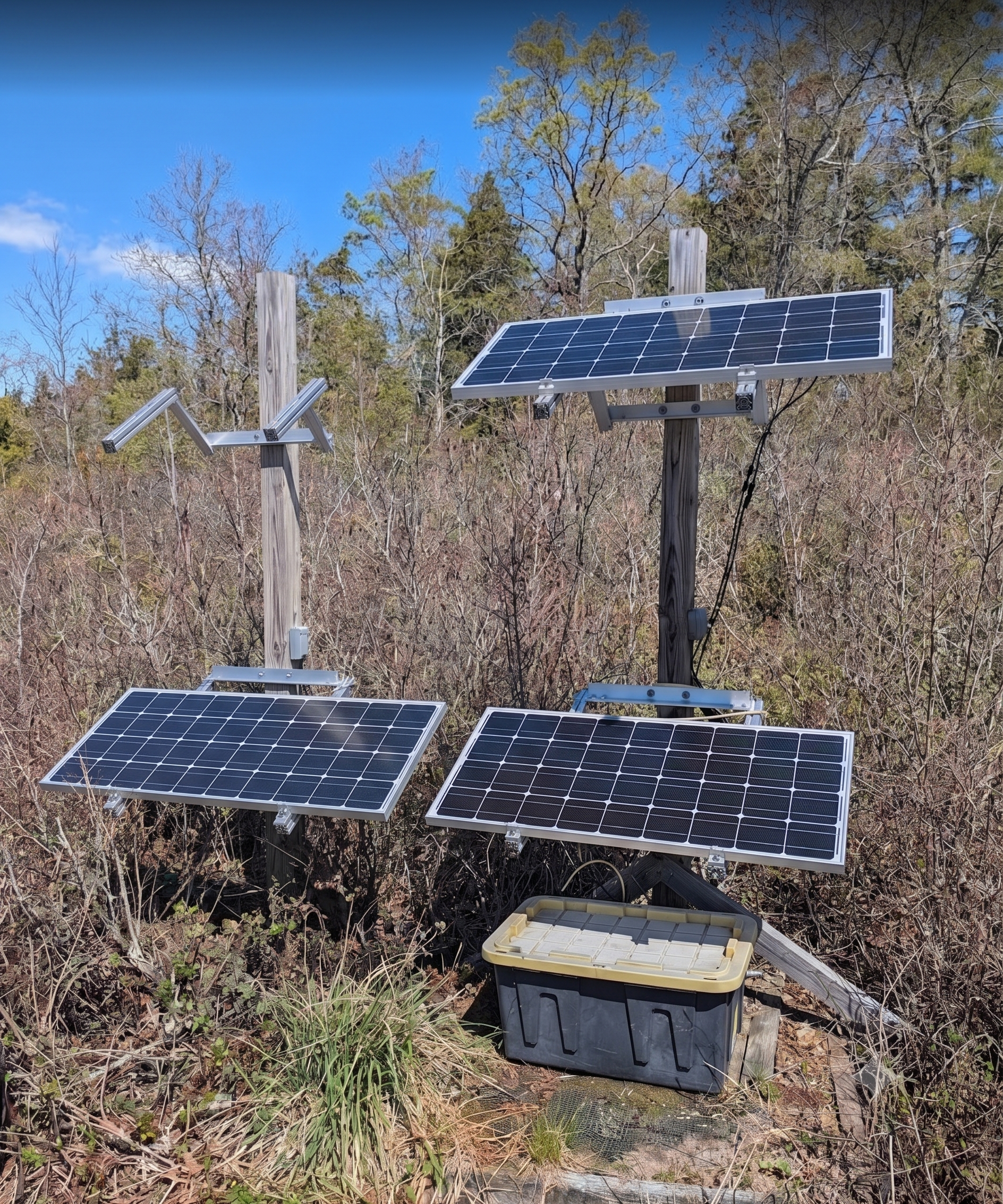
What they do not see is the off-grid solar station quietly trying to keep the whole show online.
The camera site is not plugged into the grid. It runs from batteries, solar panels, a charge controller, network gear, and a bit of wishful thinking. In past years, that worked well enough. This year, after the upgrade to a 4K camera, the system started doing something new. It would run through the day, go offline overnight, then come back after the sun had been up for a while.
That is a classic slow-drain mystery.
The camera itself uses about 15 watts. That sounds tiny until you remember that it runs 24 hours a day. Then add the wireless bridge, network switch, power controller, cloudy weather, aging batteries, wiring losses, and the inconvenient fact that loons, chicks, and predators do not schedule their activity for sunny afternoons.
The first clue was that the batteries were not failing all at once. They were simply not getting far enough ahead during the day to survive the night. A small deficit, repeated daily, becomes an early morning outage.
So the fix is not one magic part. It is math, margin, and more charging capacity.
The upgrade plan adds another solar panel, cables, connectors, and an upgraded controller. This improves battery charging confidence and formalizes better field procedures for recharging and swapping batteries when the weather refuses to cooperate. In other words: less guessing, more reserve, and a plan B.
It is not glamorous. But it is the kind of quiet infrastructure that lets everyone else see the glamorous part: a loon turning eggs, a chick hatching, or the pair going through a quiet shift change.
Behind every peaceful wildlife camera is a small pile of electronics trying very hard not to become the story, again.