Courtesy of Rick Libbey

Loon Chick Development

  • 1-2 Days

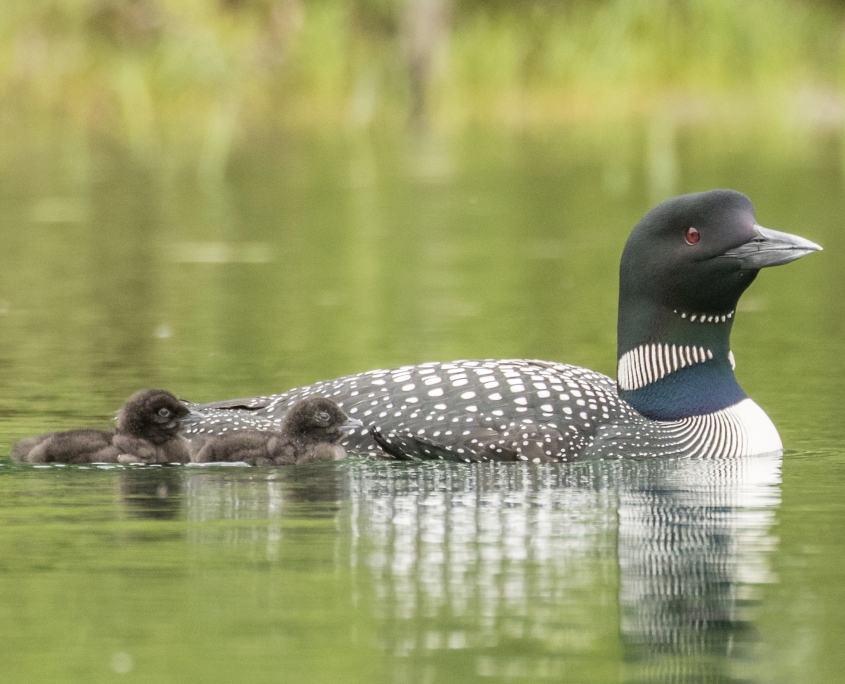
    Newly hatched chicks are covered in dark downy feathers above with white bellies. Unlike adult loons, a young loon chick is able to walk upright on land. Although they can swim immediately after hatching, chicks spend a lot of time riding on their parents’ backs during the first several days of their lives. This helps to regulate their body temperature and protects them from underwater predators. Chicks are entirely dependent on their parents for food, and one adult typically remains on the water’s surface with the chicks while the other catches fish and feeds them.
  • 1 Week

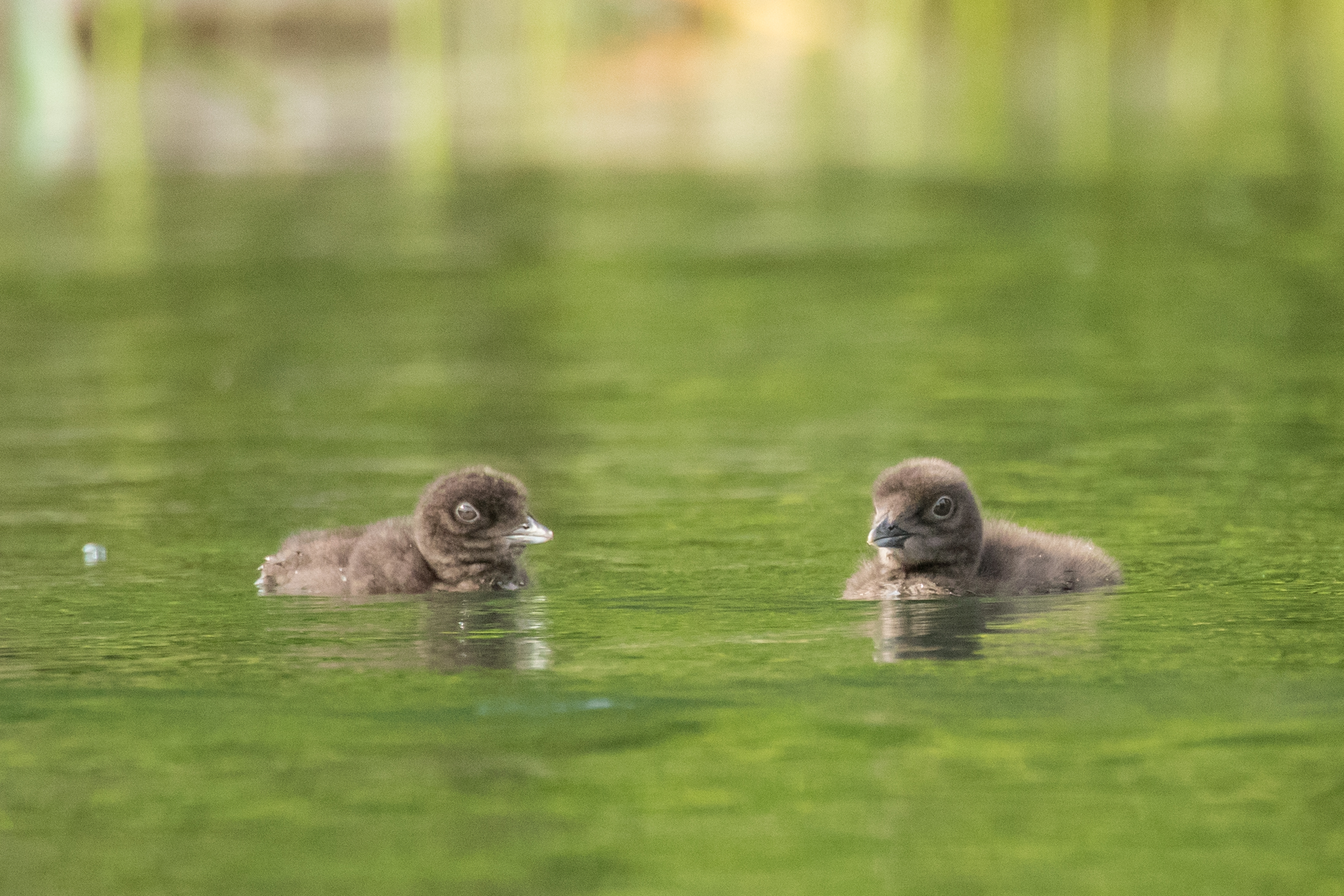
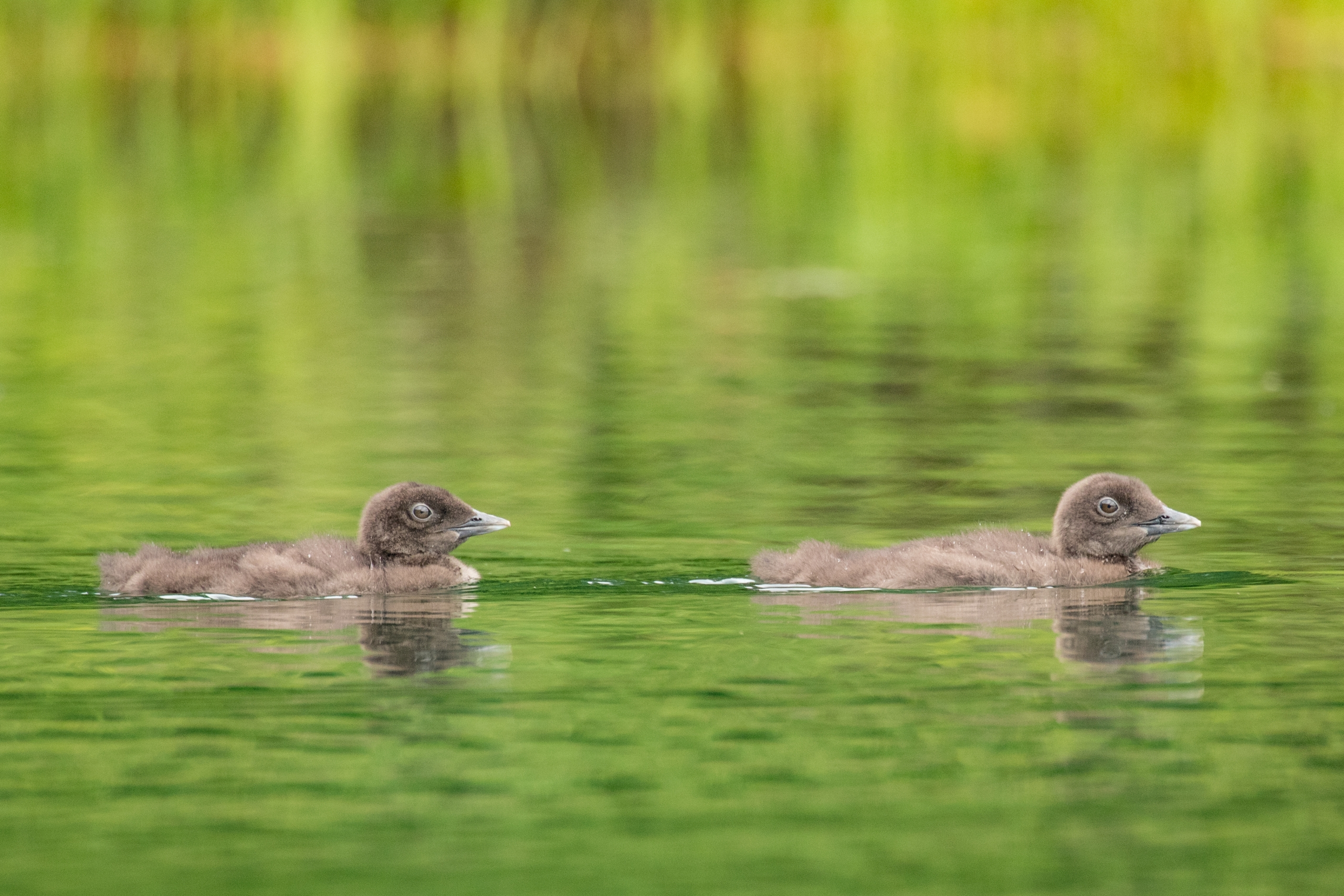
    The legs, feet, and head, which are needed for swimming and food capture, begin to grow. Chicks are better able to regulate their own body temperatures and may spend more time in the water on their own, though back riding is still common. They are able to swim to the bottom of shallow areas, probe and search around objects, and chase fish.

  • 2 Weeks

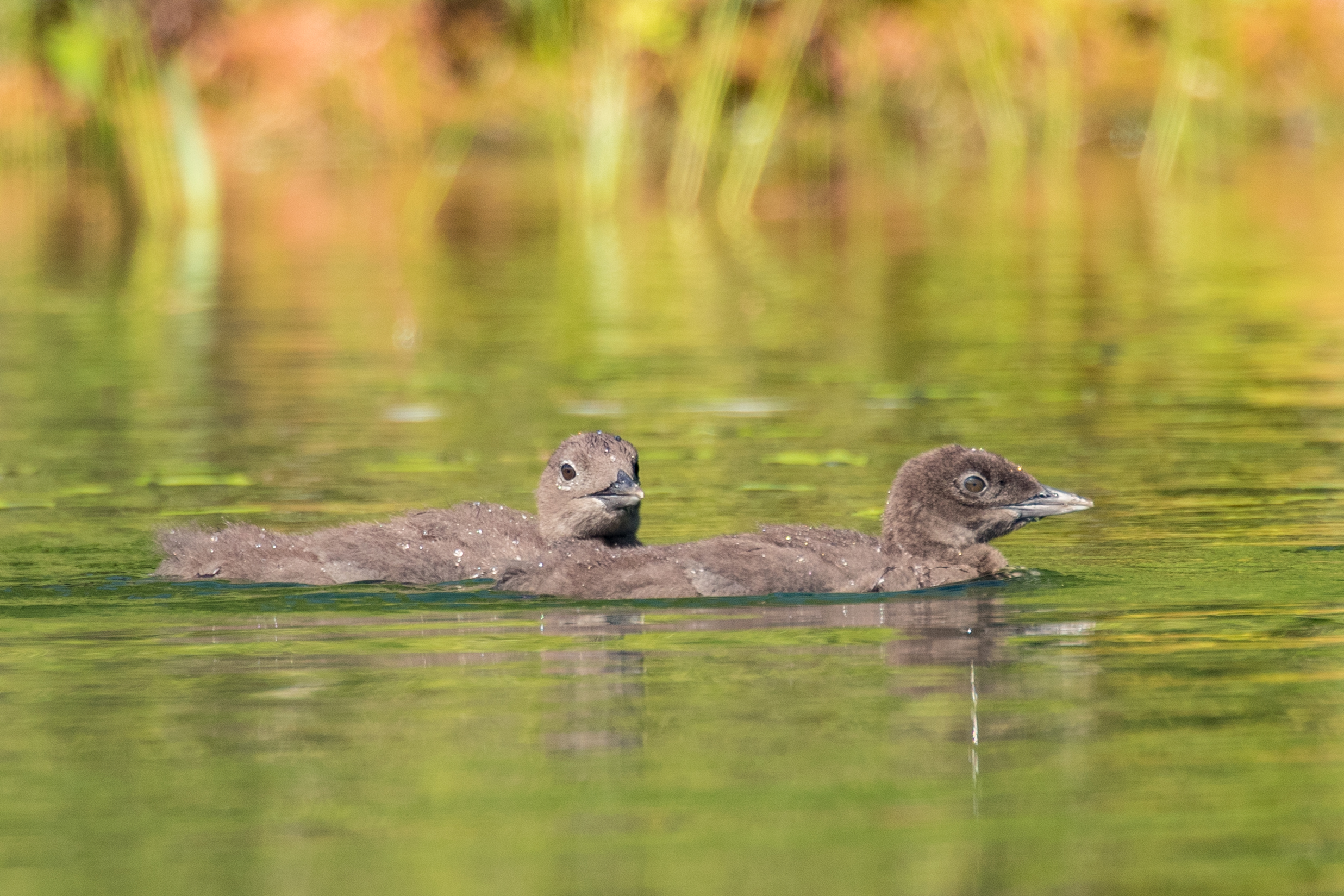
    Chicks molt into a second downy plumage that is a lighter brown color. They are able to swim underwater erratically for lengths up to 50 feet. Parents may begin leaving chicks alone on the water’s surface while both dive for food to feed them.

  • 3 Weeks

    Loon chick bodies begin to elongate. Their bills also begin to lengthen. Juvenile feathers begin to develop on white underparts. As their bodies grow and begin to take on the characteristic shape of loons, they lose the ability to walk upright on land.

  • 4 Weeks

    Growth of juvenile primary feathers begins. At this age chicks have become too large to back ride, though they may still try.

  • 5 Weeks

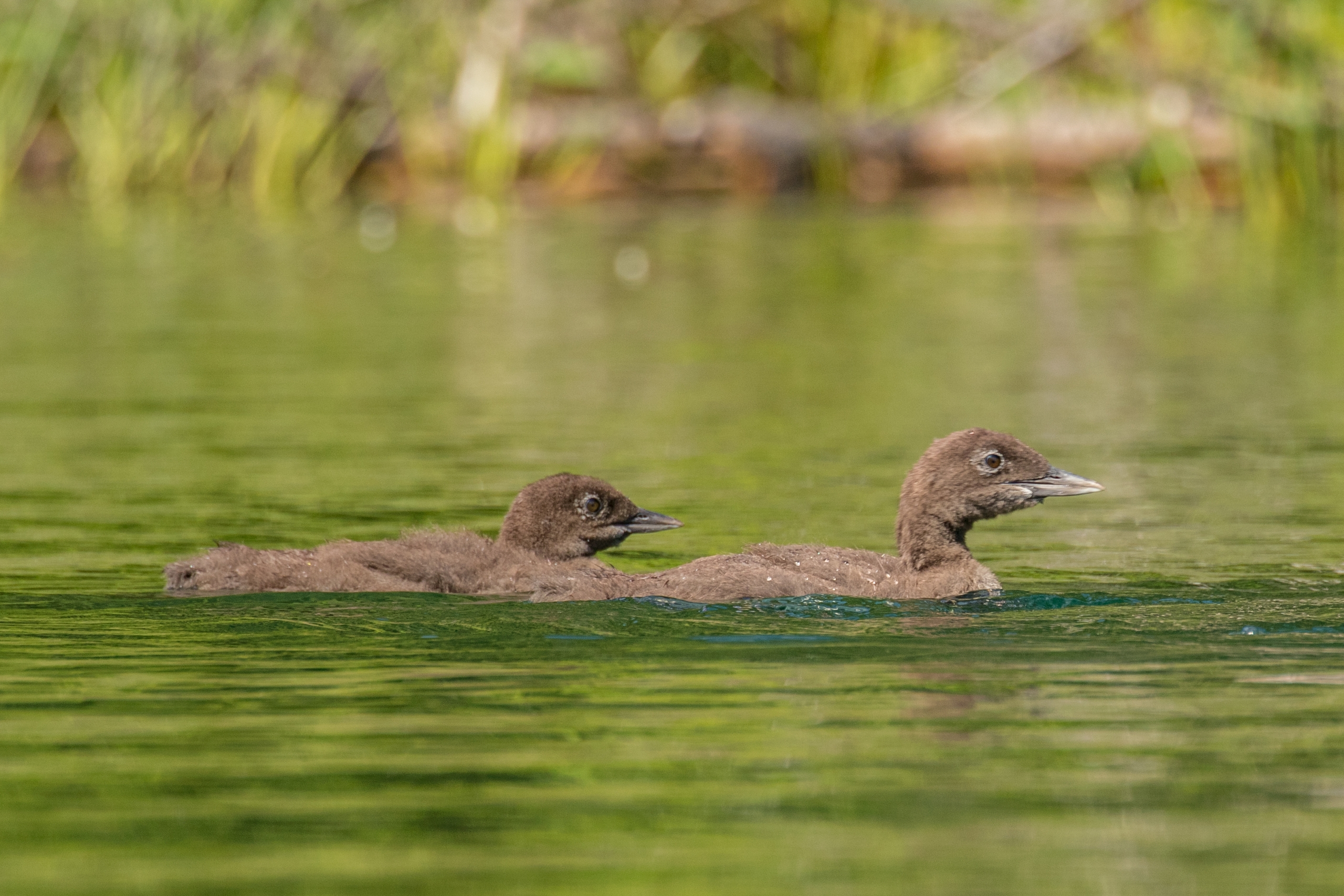
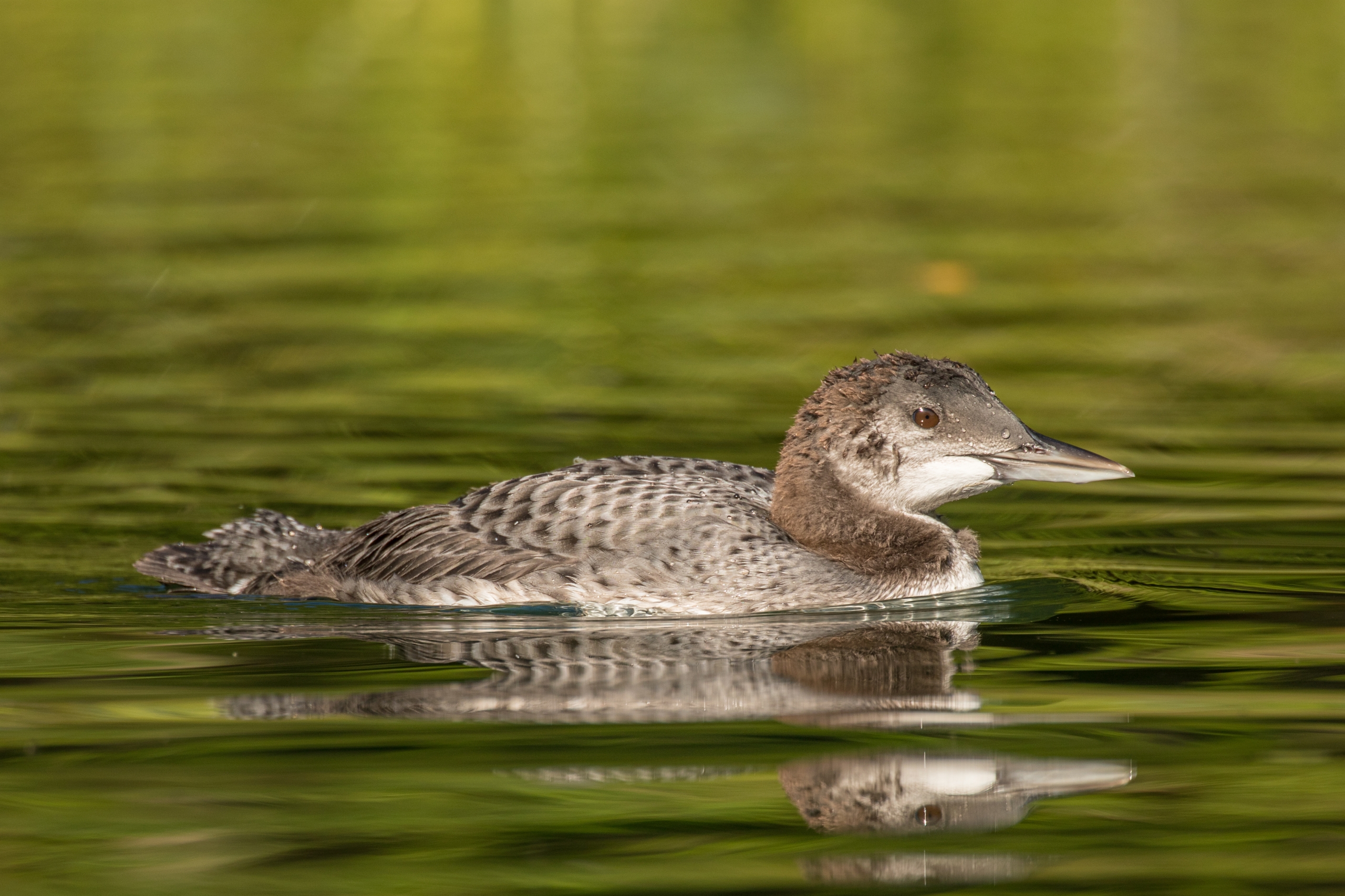
    By 5 weeks of age, chicks look a little unkempt as their juvenile contour feathers begin to develop. They can capture small prey items for themselves but remain dependent on parents for food.

  • 6-7 Weeks

    Juvenile plumage continues to develop. Adults begin leaving chicks alone for longer intervals of time, though at least one parent typically remains aware of the chicks’ location and monitors for signs of danger.

  • 8-9 Weeks

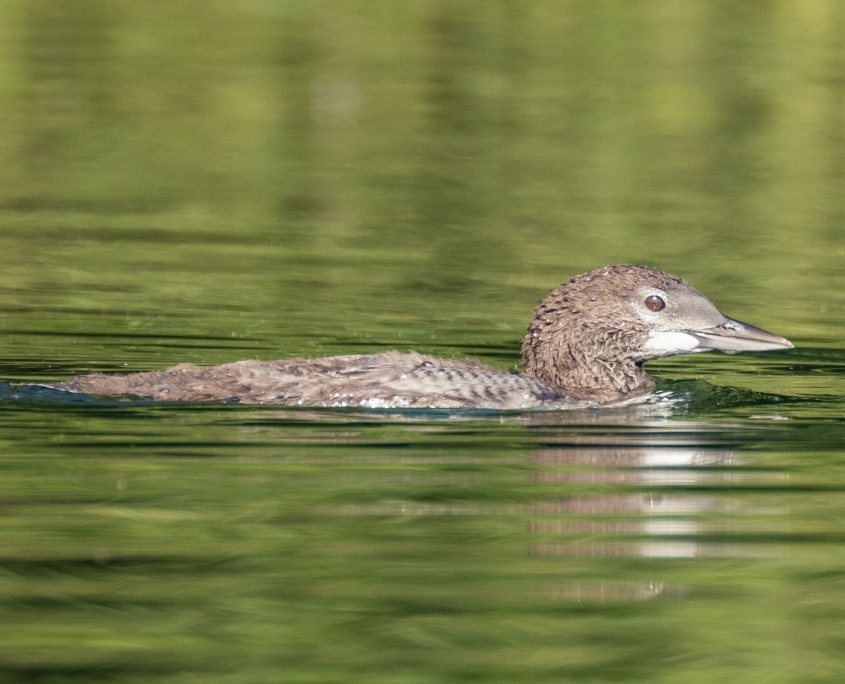
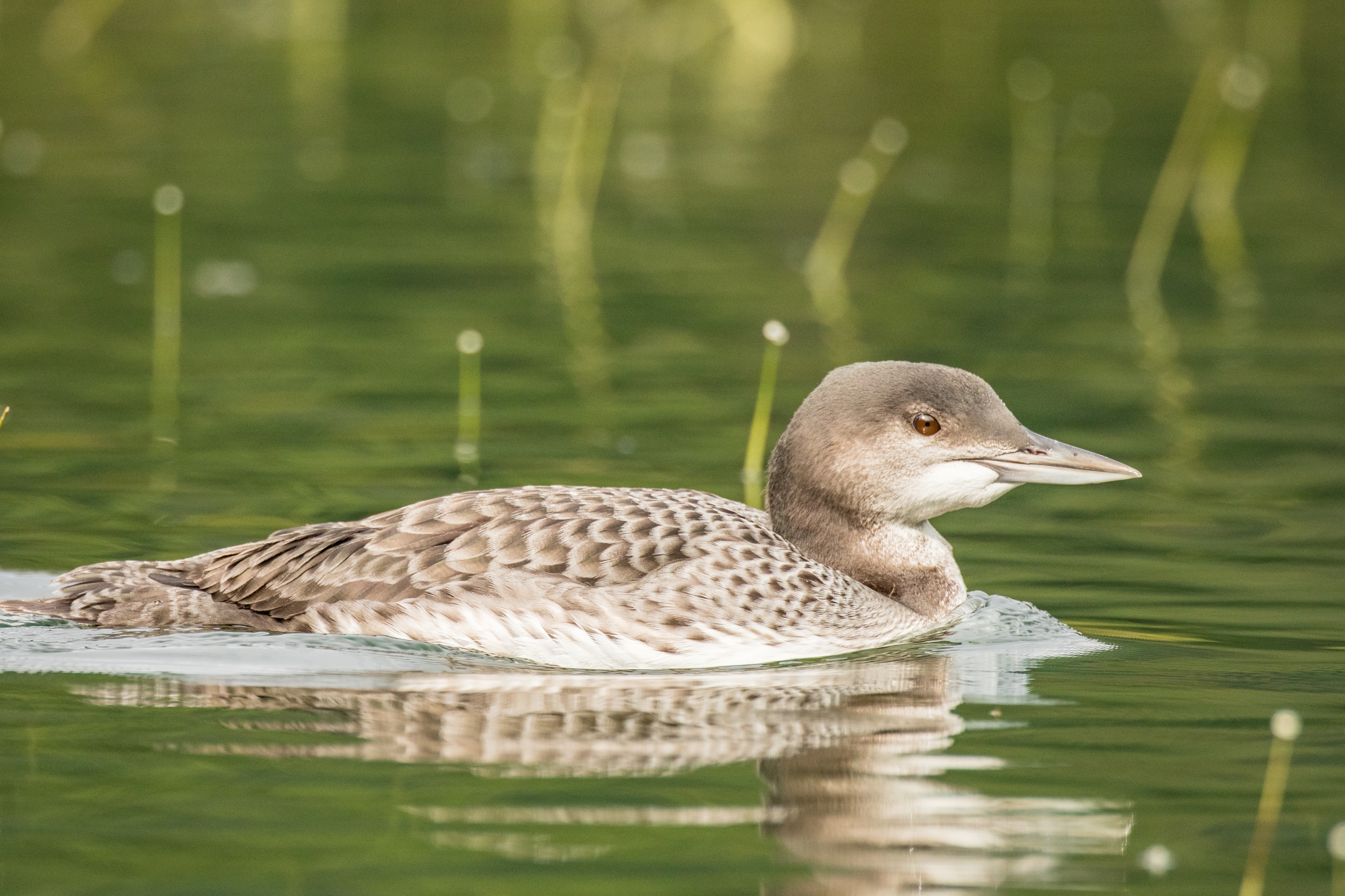
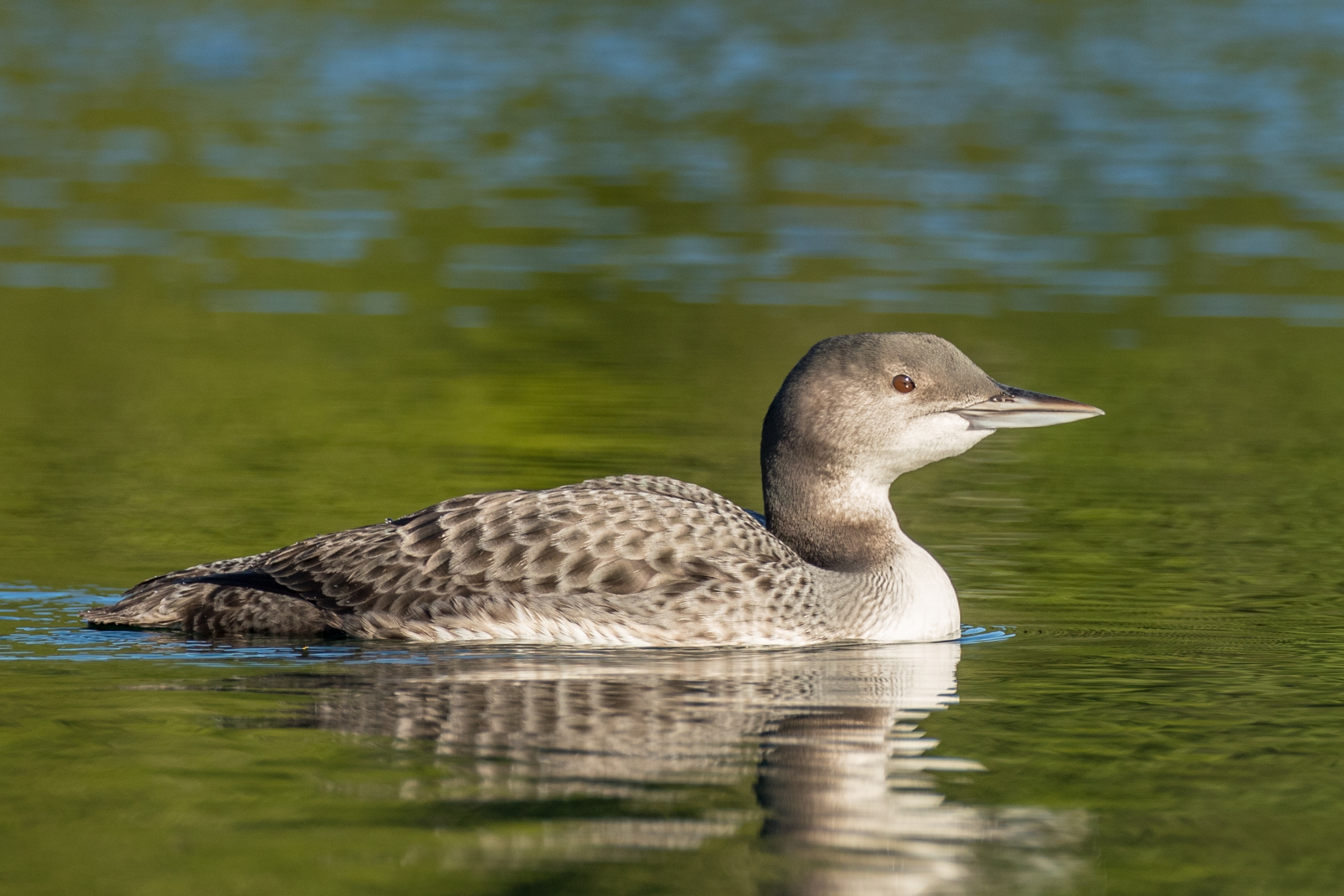
    Growth of legs, feet, and head begin to slow. Juvenile plumage has fully developed, enabling chicks to compress air out of feathers and dive efficiently.  Chicks can forage independently and capture about 50% of their daily food. They begin exercising their wings to prepare for flight.

  • 10-11 Weeks

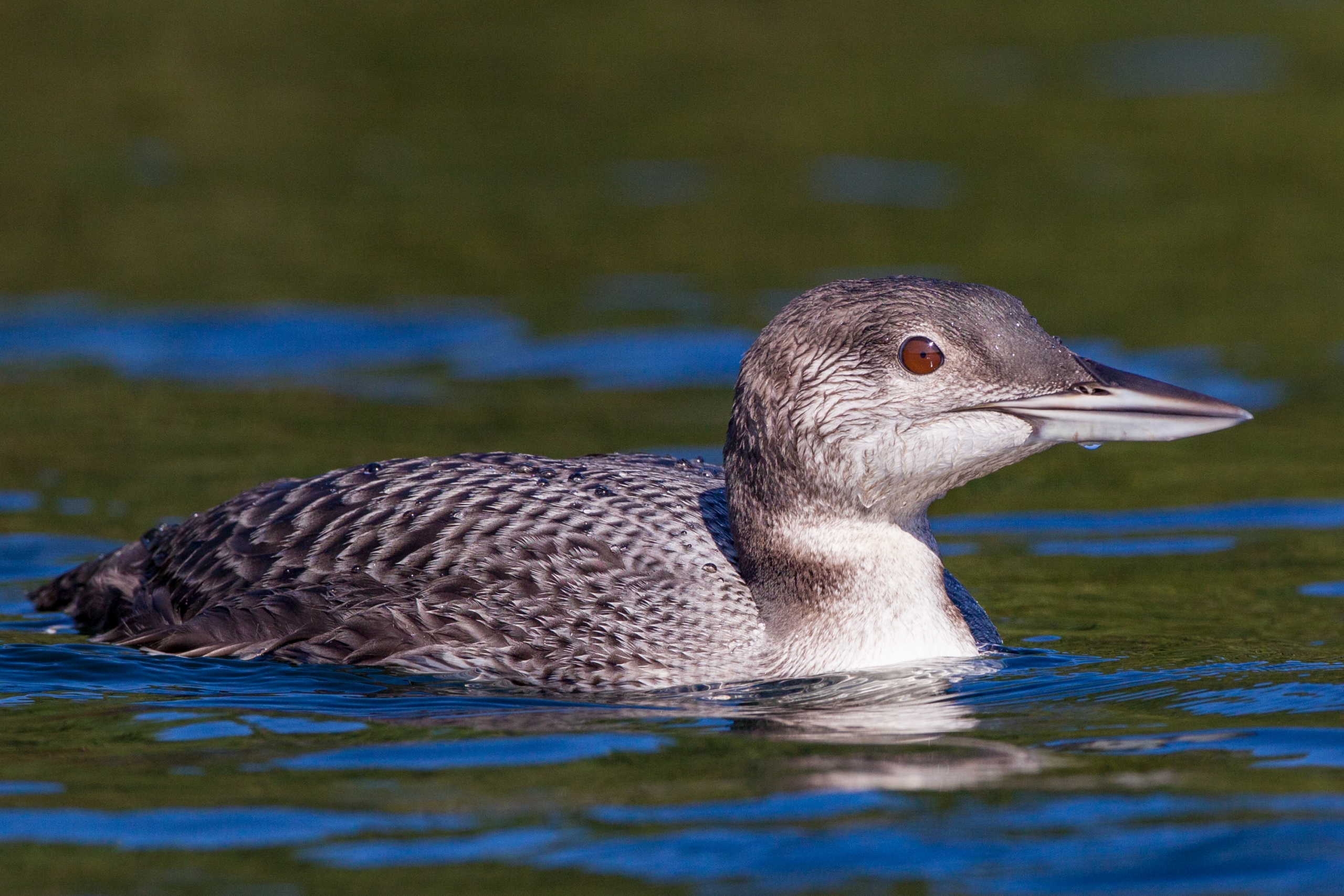
    Chicks continue to practice flight. They can capture much (roughly 90-100%) of their own food, but will still beg for and accept food from parents. At this point in the season, one parent may leave for the ocean, but the other typically stays with the chicks until they reach fledging age.

  • 12 Weeks

    By 12 weeks of age, loon chicks reach fledging age and become independent. They may take their first flight, and they eat fish of similar size to adults. At this stage, the second parent may migrate to the ocean, leaving chicks entirely alone on their natal lakes. Chicks typically leave their lakes 1-3 weeks after their parents, though some remain into the early winter.

All loon chick plumage sequence photos courtesy of Brian Reilly.

Loon Preservation Committee